Nose Et al.
The Star-Nosed Mole loves its star nose. 52% of its brain is dedicated to just the touch receptors in its nose! These touch receptors are called Eimer's organs and they're unique to moles. Eimer's organs are bumps on the skin that have beneath them multiple nerve endings, cells that react to change quickly, and cells that react more slowly. They're fairly complicated for how small they are. Our Star-Nosed Mole has 25,000 of them on their star! The European mole has about 5,000.

Now being as sensitive as they are, people have found that flicking the mole in the nose can instantly kill them from the trauma. Not everyone likes moles it would seem! The star-nose being particularly complicated and sensitive, they have the ability to somewhat put it away while they're digging. Just like you can flare and unflare your nostrils, they can do the same with their star! It's not particularly strong, they can't grab anything with it. As they're foraging; they plomp their star down, give a light squeeze, and sniff.

Maybe the most jarring thing I read while researching the star-nosed mole was the word "semi-aquatic." Sure enough, these guys live in very wet soil near rivers, lakes, and wetlands in Eastern North America. The wet soil is softer to dig through and gentler on their delicate face. Not to mention, the water is full of their favorite bugs. Yes! They've got it like that! Their large paddle-like hands are great for digging AND swimming. They routinely go hunting in creeks and lakes with many of their tunnels opening up underwater.

Our strange little star face is still blind, how does it find anything in the open water? Bubbles! The star-nosed mole is the only mammal capable of smelling underwater. It blows out bubbles, holding them with the splay of its nose, and breathes them back in with all the smell particles they picked up. You might be able to smell underwater if you used your hands to keep the bubbles close too. Scientists didn't think it could be so simple.
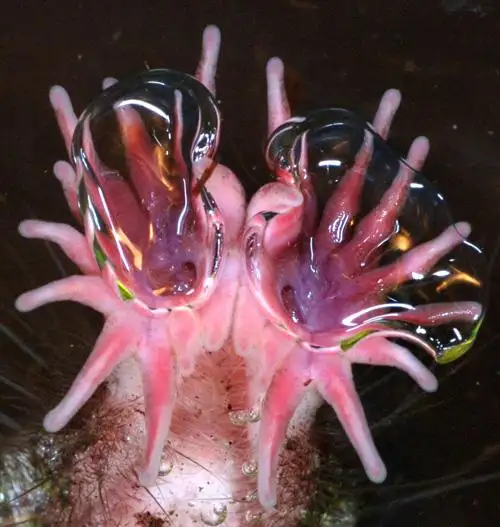
They use their star kind of like a big cylcopic eye. The further out tentacles are low resolution like your periphreal vision, and the two in the middle are very clear and sensitive. When they feel something that might be food with their outer tentacles, they "look" at it directly in the middle first to decided if it is good to eat. They can identify and eat an insect in 120ms. That's about as long as it takes you to blink and it take you about 200ms to identify an emotion on someone's face. They don't play when it comes to their food!

When I was a kid, my grandpa would pick me up from school and I'd wait at his apartment until my parents got off of work. The first thing we did when we got there was go track the moles! We'd go out in the yard and follow that day's raised dirt tunnels until they ended. It was so exciting that there was so clearly something alive in the world beneath my feet. I hoped that one day at the end of a tunnel I'd finally see what I was looking for. I've yet to find a mole, but when I step and the ground sinks I'm reminded of my grandpa and how he taught me too seek out wonder.

Overall, a very cool mammal. It's so common in Eastern North America and so many people live there, but few will ever see it. When we look at its behavior, its lifestyle, and even its brain; it all comes back to that spectacular star nose! It is great to have in an ecosystem, aerating the soil and eating aquatic insects. If it's out in the open, which it does often enough, it's easy grabs. And for as much as it swims, it can only hold its breath for 30 seconds.